Wednesday, November 18, 2026

Hachiko the Dog Who Waited Ten Years at a Train Station

Hachiko the Dog Who Waited Ten Years at a Train Station
Photo from the web

Hachiko the Akita dog waited every single day at Shibuya Station for a man who was never coming back. For almost ten years, he sat by the exit and watched the crowds for his owner, Professor Hidesaburo Ueno. It is a story that proves love does not have a clock or a calendar.

The short version of the story is that Hachiko and the Professor had a perfect routine in Tokyo during the 1920s. Every morning, they walked to the station together, and every evening, the dog returned to meet the train. When the Professor died suddenly at work, Hachiko stayed. He lived on the streets and kept his watch for 3,646 days until he died in the same spot where he last saw his friend. It is the most famous example of loyalty in history.

How a Small Puppy Met a Lonely Professor

This story starts in 1924 in a rural part of Japan called Odate. Hachiko was born on a farm, a golden-brown Akita with thick fur and a curled tail. At the time, Professor Ueno was looking for a purebred Akita, which was quite rare back then. He taught at Tokyo Imperial University and lived a quiet, scholarly life. When the puppy arrived in a crate after a long train ride, he was weak and cold. The Professor spent nights nursing him back to health, and they formed a bond that nobody could break.

They lived in a neighborhood called Shibuya. Every morning, as the sun came up, the two of them would walk out the front door. Hachiko was not just a pet; he was a partner. He walked the Professor all the way to the doors of Shibuya Station. He watched the man buy his ticket and disappear into the crowd of commuters. Then, the dog would turn around and walk home alone. He knew exactly when the evening train would pull in.

At 3:00 PM every afternoon, Hachiko was back. He would sit near the wicket and wait. When the Professor stepped off the train, his face would light up to see those pointy ears and wagging tail. They did this every day for over a year. Neighbors in Shibuya got used to seeing them. It was a local clock they could set their watches by. You can read more about how people share these kinds of tales in this look at oral history and how stories pass down through time.

Hachiko the Dog Who Waited Ten Years at a Train Station
Photo: Wikimedia Commons

The Day the Routine Broke Forever

May 21, 1925, started like any other Tuesday. The Professor patted Hachiko on the head, boarded his train, and went to the university. During a faculty meeting that afternoon, he suffered a sudden brain hemorrhage. He died instantly. He never made it to the train station that evening. He never even got to say goodbye to his family or his dog. Back at Shibuya, the 3:00 PM train arrived, and the platform emptied. Hachiko sat there, eyes fixed on the exit, but the one face he wanted never appeared.

Imagine being that dog. You do not understand what death is. You only know that your friend is late. Hachiko waited until the last train of the night, then he finally went home. But the next day, he was back. And the day after that. He thought if he just stayed in the right spot, the world would fix itself. It is heartbreaking to think about him sitting there while the Professor's family was busy with a funeral he could not attend.

The family eventually moved away, and they gave Hachiko to a former gardener who lived miles from the station. But the dog would not stay put. He kept escaping and running back to the Professor's old house. When he realized the house was empty, he went to the only other place where they used to meet. He went back to the station. He decided that the station was his home now because that was where the hope lived.

Life on the Cold Streets of Shibuya

For the next few years, Hachiko became a permanent fixture of the city. He lived under train cars or in the crawl spaces of the station. He was often hungry and cold. In the beginning, the station staff and the commuters were not always kind to him. Some people thought he was just a stray and would throw water on him or try to shoo him away. Kids would sometimes tease him because he just sat there, staring at the doors, not moving for hours.

His body started to show the wear and tear of life outside. One of his ears began to droop, and he got scars from fights with other dogs. He looked like a shadow of the healthy puppy the Professor had raised. Yet, every single day, when the afternoon train whistled, he stood up and walked to his spot. He did not care about the rain or the snow. He only cared about that exit. You might enjoy reading about other long-term mysteries like The Letter That Arrived Fifty Years Late to a House in Maine which also shows how time feels different when you are waiting for something important.

Everything changed in 1932 when one of the Professor's former students saw Hachiko at the station. The student followed the dog to the gardener's house and learned the whole history. He was moved to tears by the dog's dedication. He wrote an article for one of Tokyo's biggest newspapers. He titled it "The Tale of a Poor Old Dog: Waiting for Seven Years for His Deceased Master." Overnight, Hachiko became a national hero.

Why did Hachiko wait for ten years?

People often ask what goes through a dog's mind during a decade of waiting. Scientists say dogs have a very strong sense of time based on their internal rhythms. For Hachiko, the 3:00 PM train was a biological trigger. But beyond biology, there was a deep emotional bond. To Hachiko, the Professor was his entire world. If you want to see more about how these emotional accounts affect us, check out this page on the human-interest story and why we love them.

Once the newspaper article came out, the treatment of the dog changed. People started bringing him gourmet food and treats. Travelers would come from far away just to pat his head or sit with him for a minute. The station staff who used to shoo him away now gave him a warm place to sleep inside. He became a symbol of the old Japanese values of loyalty and devotion. He was no longer a stray dog; he was "Chuken Hachiko," which means the faithful dog Hachiko.

Even with all the new attention, Hachiko never got distracted. He would accept a treat, but his eyes never left those station doors. He was not looking for fame or snacks. He was looking for his friend. It makes me wonder if he felt the Professor's spirit there. Or maybe he just felt that if he left his post, that would be the moment the Professor finally walked through the door. He stayed for nine years, nine months, and fifteen days.

The Final Meeting and a Lasting Legacy

On March 8, 1935, Hachiko was found dead on a street near Shibuya Station. He was eleven years old. He had spent almost his entire life waiting. When the news broke, the city went into mourning. They brought his body back to the station waiting room, and people covered him in flowers. Even the Professor's widow came to pay her respects to the dog who had loved her husband more than anyone else could imagine.

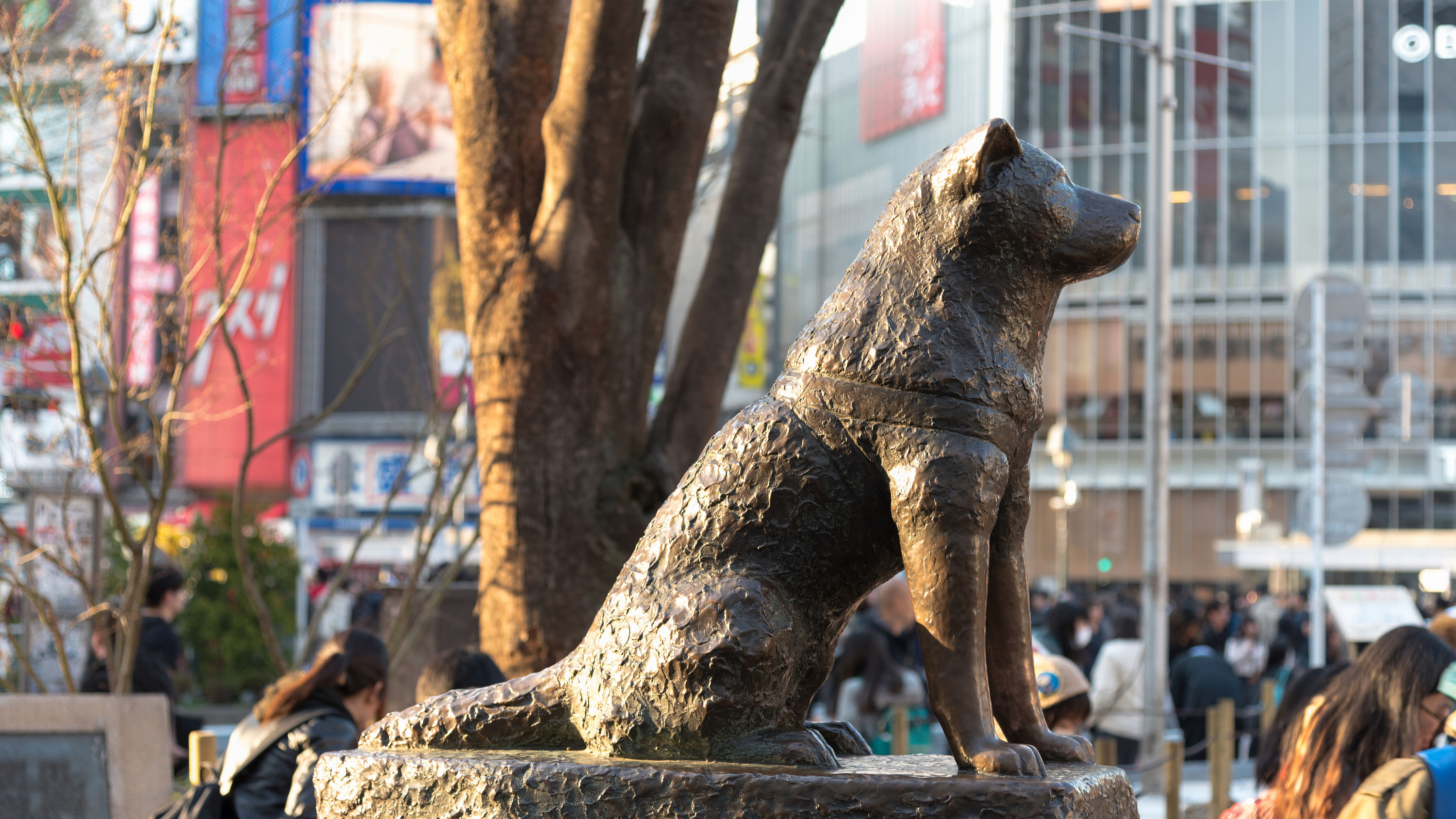
Today, if you go to Shibuya Station, you will see a bronze statue of Hachiko. It stands at the "Hachiko Exit," the busiest meeting spot in the world. Thousands of people meet there every hour. They say, "Meet me at Hachiko," using the dog's loyalty to find their own friends. It is a beautiful way to keep his memory alive. He finally became the landmark he had been in real life for so many years. You can find more true stories about loyal animals and amazing bonds on our main page.

The story of Hachiko reminds us that love is not about what we get back. It is about the choice to stay. Even when the world moves on, and even when it seems like hope is gone, there is something noble about standing your ground. Hachiko did not need words to tell us that. He just needed to show up. Next time you are waiting for someone who is running late, think of the dog who waited ten years. It might make your five minutes feel a little shorter.

What would you wait ten years for? Is there a person or a dream that you would never give up on, no matter what? It is a big question to ask yourself as you go about your day. Maybe we all need a little bit of that Hachiko spirit in our lives.

The Letter That Arrived Fifty Years Late to a House in Maine

The Letter That Arrived Fifty Years Late to a House in Maine
Photo from the web

A yellowed envelope sat in a mail sorting center for over five decades before it finally reached a porch in Maine. This letter was sent in 1969 and did not show up until 2020. Most of us get annoyed if a package is two days late, but this delay lasted a whole lifetime.

The letter was written by a man named Donald Ronzo to his parents. It traveled from a military base in California all the way to Pittsfield, Maine. When it finally arrived, the world had changed. People were using iPhones instead of rotary dials, and the person the letter was for had been gone for years. It is a story about how words never really lose their power, even when they take fifty years to arrive.

The strange discovery of the 1969 letter

Imagine checking your mailbox on a normal Tuesday and seeing a piece of paper from the past. That is exactly what happened to the people living in the old Ronzo family home. The envelope looked like it had been through a war. It was stained and worn at the edges, but the handwriting was still clear. The postmark was dated 1969, a year when the moon landing was the biggest news on earth.

The current owners of the house did not know a Donald Ronzo. They realized right away that this was not junk mail. It was a time capsule. They decided to find out who it belonged to because they felt the weight of those old words. This kind of event is what writers call a human-interest story because it connects us all through a shared feeling of wonder.

How does a letter get lost for that long? The post office does not really have a clear answer. Sometimes a letter falls behind a sorting machine. Sometimes it gets stuck inside a crack in a wooden floor at an old office. It stays there in the dark while decades pass by. Then, one day, someone moves a heavy desk or cleans out a corner, and the letter sees the light again.

The Letter That Arrived Fifty Years Late to a House in Maine
Photo: Wikimedia Commons

Who was the man who sent the letter?

Donald Ronzo was a young man in the Air Force when he sat down to write to his mom and dad. It was a simple note. He wanted to tell them he was doing well and that he missed them. In 1969, long distance phone calls were very expensive. Writing a letter was the only way for a young soldier to stay close to home. He licked the stamp, dropped it in a blue box, and assumed his parents would read it in a few days.

He never knew the letter vanished. He probably thought his parents got it and just didn't mention it. Life moved on for Donald. He finished his service, started a career, and grew older. His parents eventually passed away without ever knowing their son had sent those specific words of love from California. It makes you think about all the small things that get lost in the gaps of our lives.

When the letter finally showed up in 2020, Donald was seventy years old. He was no longer the young kid in uniform. He was a grandfather living in a different state. A local news reporter tracked him down to tell him the news. Can you imagine getting a call saying a letter you wrote as a teenager just arrived at your childhood home? It must feel like a ghost reaching out to shake your hand.

Why did the letter take fifty years to arrive?

Many people ask how the mail system can fail so badly for so long. The truth is that millions of pieces of mail move every day. In the late sixties, everything was done by hand or by very simple machines. If a letter slipped into a hidden spot, it stayed there. The United States Postal Service often says they try to deliver every piece of mail they find, no matter how old it is. They take pride in finishing the job, even if they are fifty years late.

In this case, the letter likely spent years sitting in a sorting facility in Pittsburgh. It might have been wedged inside a mail bag that was put into storage. When that storage area was finally cleared out, the letter was found. Instead of throwing it away, a worker saw the address and put it back into the system. It is a bit like the luck involved in the Chesley Sullenberger and the Miracle on the Hudson story where everything had to line up just right for a good ending.

The journey from Pittsburgh to Maine usually takes three days. This journey took over 18,000 days. By the time it reached Pittsfield, the price of a stamp had gone up from six cents to over fifty cents. The mail carrier who finally put it in the box probably noticed the old stamp and the old style of the envelope. It was a piece of history delivered on a modern mail truck.

The moment Donald Ronzo read his own ghost

When Donald finally saw the letter, he was shocked. He recognized his own handwriting from fifty years ago. He said it felt like looking at a different person. The letter talked about things that didn't matter anymore, like old friends from the base or what he ate for dinner. But the main point was the connection to his parents. Reading it made him feel close to his mother again for a moment.

He told reporters that it was a blessing to have this piece of his past returned to him. It reminded him of a simpler time when you had to wait for news. Today, we send a text and get a reply in ten seconds. Back then, you had to trust the paper and the ink. You had to wait for the mailman to walk up the path. This letter is a great example of oral history being kept alive through written words that refused to disappear.

Donald decided to keep the letter as a family treasure. He wants his grandkids to see it. It serves as a reminder that some things are worth waiting for, even if the wait is longer than a human life. It also shows that the things we say to the people we love stay true, no matter how much time passes. You can find more amazing tales on our true stories blog where we look at the strange ways the world works.

What this story teaches us about our own words

This story makes me want to write more things down. We live in a digital world where everything is deleted or buried in a cloud. A physical letter can survive in a dark corner for fifty years. An email probably won't. There is something special about holding a piece of paper that someone else held decades ago. It carries the touch of their hand and the thoughts they had in that exact minute.

If you wrote a letter today and it arrived in the year 2074, what would it say? Would the person reading it understand your life? Donald's letter was simple, but it was enough. It told his parents he was okay. That is often the only thing parents ever want to hear. The delay was huge, but the message was right on time for a man who needed a memory of his family.

The next time you walk past your mailbox, think about the letters that might still be on their way. Maybe there is something meant for you that is currently stuck behind a shelf in a distant city. It might take another ten or twenty years, but it could still find you. The mail system is not perfect, but it is persistent. It proves that a message sent with love will eventually find its home.

Do you still write letters to your friends or family? Maybe it is time to pick up a pen and buy a stamp today. You never know who might be reading those words fifty years from now. What is one thing you would want to tell your future family if you knew the letter would take a lifetime to arrive?

Tuesday, November 17, 2026

Chesley Sullenberger and the Miracle on the Hudson

Chesley Sullenberger and the Miracle on the Hudson
Photo: Art Institute of Chicago

Captain Chesley Sullenberger landed a big passenger plane on the freezing Hudson River in New York without losing a single life. Most pilots spend their whole careers flying in the sky, but he had to put a metal tube full of people right onto moving water.

The short answer is that quick thinking, great training, and a lot of luck saved everyone on board US Airways Flight 1549. Birds flew into both engines just minutes after takeoff, and the plane lost all power over a very busy city.

What Happened in the Sky Over New York

January 15, 2009 started like any normal day at LaGuardia Airport. Passengers sat in their seats, reading papers or listening to music, while Flight 1549 pushed back from the gate. Nobody knew they were about to star in a real life action movie.

Canada geese smashed into the front of the plane at three thousand feet. Loud bangs echoed through the cabin, and smoke filled the air with a terrible smell. People felt a sudden drop that made their stomachs turn upside down.

Sully looked at his co-pilot, Jeff Skiles, and took the controls of the plane. They did not panic or scream. They just went down their emergency checklist step by step, trying to find a runway that they could actually reach.

Every second counted because the giant plane fell fast without any engine power. You can read more about how people tell these kinds of tales through oral history records left by the survivors. The cockpit was dead quiet except for the sound of wind rushing past the glass windows.

Chesley Sullenberger and the Miracle on the Hudson
Photo: Wikimedia Commons

Why the Hudson River Was the Only Choice

Airports were too far away for a plane dropping like a rock. Teterboro Airport was close, but Sully knew they would not make it over the tall buildings and busy streets. Hitting a highway meant crashing into cars and houses.

Water was the only open space big enough to hold a plane that size. The Hudson River looked like a gray highway running right through New York City. Sully aimed the nose down toward the water and hoped the thin metal belly would hold together.

Passengers held onto their armrests and braced for the worst impact of their lives. Some people prayed quietly while others squeezed their eyes shut. The plane hit the water with a loud crunch, throwing spray high into the cold air.

Water started to pour into the back of the cabin through the broken doors. People had to move fast before the plane sank into the dark river. It was just like reading a heavy human-interest story about ordinary folks facing the edge of death.

How Everyone Got Out Alive

Freezing wind blew across the river as the emergency doors popped open. Water rose past the ankles of passengers standing on the emergency wings. No one pushed or shoved, and they helped each other out into the biting cold.

Ferry boats rushed across the water from Manhattan to pick up the wet and shaking people. Captain John Leonard steered his boat right up to the wing of the sunken plane. Crew members pulled people out of the icy water with bare hands.

All one hundred fifty five people on that flight walked away with their lives. Some had minor cuts and bruises, but doctors checked them all out and sent them home to their families that same night.

You can learn more about staying alive in crazy spots by looking at basic survival skills guides online. It is wild to think that a trip to the grocery store could turn into a swim in the winter river.

What We Can Learn From Flight 1549

People often ask how anyone stays that calm when death stares them in the face. Sully practiced his job for decades so his brain knew what to do without thinking. He did not let fear stop him from doing the right thing.

You never know when a normal Tuesday will test everything you know. That is why staying ready and keeping a cool head matters so much in life. Sometimes you just have to look at a bad problem and make the best choice you have.

If you love stories about big metal birds on cold water, you might also like to read about how the famous ship Endurance Found Upright on the Antarctic Sea Floor after a hundred years. History is full of wild moments where people beat the odds against them.

Think about what you would do if your engine cut out right now. Do you have the grit to make a hard choice and keep going? Share your thoughts on amazing true stories with a friend over coffee tomorrow.

Endurance Found Upright on the Antarctic Sea Floor

Endurance Found Upright on the Antarctic Sea Floor
Photo: Art Institute of Chicago

The ship found perfectly upright on the sea floor is Ernest Shackleton's Endurance. In March 2022, searchers spotted the wooden wreck ten thousand feet down under the ice of Antarctica. It looked like it sank yesterday.

The ship went down in 1915, crushed by thick ice pack in the Weddell Sea. For over a century, people thought the sea had ground the wood to bits. Instead, cameras showed the ship standing tall in the dark, its steering wheel intact and its golden name still shining across the stern.

How the Endurance Was Lost in the Ice

Picture the scene in January 1915. Ernest Shackleton and his crew of twenty-seven men were sailing toward Antarctica on a wooden ship called Endurance. Their goal was bold. They wanted to walk across the whole frozen continent from one side to the other. They never even got to set foot on the main shore.

Just miles from land, sheets of thick sea ice drifted around them. The wind blew hard from the north. Within days, the ice locked together like giant puzzle pieces. The ship was trapped. Shackleton wrote in his diary that the ship sat like an almond in a piece of hard toffee. They could not move an inch forward or backward.

Winter set in, bringing total darkness and temperatures dropping past thirty below zero. The crew lived on the stuck vessel for ten months. They played games, listened to a banjo, and walked their sled dogs on the ice. But deep under them, the ocean currents were moving the ice pack, twisting and squeezing the ship's oak hull.

In October, the wood began to snap. Water poured into the lower decks. The men took to the hand pumps, working in freezing water up to their knees. On October 27, Shackleton gave the order to abandon ship. The crew unloaded tents, food, and three small open lifeboats onto the ice floes. A few weeks later, on November 21, 1915, the crushed ship slipped beneath the slush and sank to the seabed.

Endurance Found Upright on the Antarctic Sea Floor
Photo: Wikimedia Commons

The Impossible Survival of Shackleton's Crew

When the ship went down, Shackleton's new mission was simple. Bring every single man home alive. It sounds impossible when you see where they were. They were hundreds of miles from help, stranded on shifting ice sheets that could split open at any hour.

They camped on melting ice for months, hunting seals and penguins for meat. When the ice finally broke apart under them in April 1916, they jumped into their three small wooden rowboats. They spent five brutal days on stormy, freezing waters until they hit a rocky strip called Elephant Island. No one lived there. No ships ever passed by. If they stayed there, they would starve.

Shackleton took five men and the best small boat, the James Caird. They sailed eight hundred miles across the wildest ocean on Earth toward South Georgia island, where whalers had a station. Waves were as tall as houses. The spray froze into sheets of ice on their clothes and gear. It took sixteen days of pure grit to make landfall.

Even then, they had landed on the wrong side of the island. Shackleton and two men had to hike across jagged mountain peaks and glaciers with no climbing gear, using screws pushed through their boot soles for grip. They reached the whaling station, got help, and mounted four rescue trips. In the end, not one man from the crew died. If you enjoy incredible tales of people beating impossible odds, read about Tsutomu Yamaguchi: The Man Who Survived Two Atomic Bombs for another look at sheer human will.

Why Did the Ship Stay in One Piece for a Century?

Most wooden ships that sink in the sea fall apart quickly. Woodworms and tiny sea bugs chew the timbers down to mud in just a few decades. The Titanic, made of steel, is slowly being eaten away by iron-loving bacteria. So why did the wooden Endurance look brand new after one hundred and seven years?

The answer comes down to two things: the freezing water and the lack of bugs. The water at the bottom of the Weddell Sea is near freezing, about zero degrees Celsius. That deep chill slows down all decay. It acts like a giant freezer chest in the dark.

Even better, the small sea worms that eat wood do not live in the icy Antarctic waters. They need warmer seas to survive. Without those pests drilling into the beams, the Norwegian fir and oak stayed solid. The thick mud on the sea floor is also calm. Deep ocean currents barely stir the bottom, leaving the ship undisturbed in the black water.

This classic account became a famous Human-interest story that people retold for generations. Scientists knew the ship might still be down there, but finding it seemed like hunting for a needle in a frozen haystack.

How Searchers Found the Ship in 2022

Many people had dreamed of finding the Endurance, but the sea ice always stopped them. Modern icebreakers still struggle in the Weddell Sea. In early 2022, an expedition called Endurance22 set sail from Cape Town aboard a South African polar ship named the S. A. Agulhas II. The team was led by polar explorer John Shears and marine historian Mensun Bound.

They had two major tools on their side: advanced underwater drones and an old journal entry. Back in 1915, the ship's captain, Frank Worsley, was a master with a pocket compass and a sextant. Right before the ship sank, he took readings through clouds to chart their exact spot on the map. He wrote down the coordinates by hand.

The search team put deep-water drones into the water through gaps in the sea ice. These machines skimmed just above the bottom, bouncing sound waves off the sea floor to make maps. For two weeks, they found nothing. The ice was closing in again, and the team was running out of fuel and time.

Then, on March 5, 2022, the sonar screens showed a strange shape. The drone sent back high-definition video. The team could not believe what they saw on the monitors. The ship was standing totally upright, balanced on its keel in the sediment, just four miles from where Captain Worsley had marked it down a century before.

What Does the Ship Look Like Today?

The video footage from ten thousand feet down is jaw-dropping. The ship sits quiet in clear, blue water. The wooden planks look as clean as the day they were cut. You can see individual paint brush strokes on the deck rails.

Right at the back of the vessel, the brass letters spelling "ENDURANCE" shine in the camera lights. Below the letters sits the three-pointed polar star from the ship's original name, Polaris. If you love discovering unbelievable real stories from history, seeing that bright nameplate in the deep will give you chills.

  • The ship's wheel stands tall on the poop deck, looking ready for a sailor's hands.
  • Ropes and rigging hang from the masts, draped over the deck like old cables.
  • The ship's bell lies near the bridge, free of mud and rust.
  • Dishes and boots left behind by the men sit quietly in the cabins.
  • Anemones and pale sea sponges grow along the timbers, acting like silent guards.

Under international treaties, nobody touched the ship. The team did not lift a single cup or rope. They scanned every board with lasers to build a 3D digital model, took thousands of photos, and brought the drone back up. The wreck will stay right where it rests, forever frozen in time at the bottom of the world.

Next time you face a rough week, think of Shackleton's crew on the ice pack, waiting out the polar night with nothing but hope and a warm banjo tune. What do you think you would miss most if you were trapped on the ice like that?

Monday, November 16, 2026

Tsutomu Yamaguchi: The Man Who Survived Two Atomic Bombs

Tsutomu Yamaguchi: The Man Who Survived Two Atomic Bombs
Photo: Wikimedia Commons

Tsutomu Yamaguchi was standing in a potato field in Hiroshima when the sky burst open into a flash of white light. It was August 6, 1945, and he was just two miles from ground zero of the first atomic bomb. Three days later, he was sitting in an office in Nagasaki when the second bomb hit.

He did not just witness the terrifying start of the nuclear age. He survived it twice, lived to be 96 years old, and spent his last decades telling the world why no one should ever face a bomb again. His life is one of the most unbelievable stories of endurance in human history.

Most people can barely imagine living through a single war zone blast. Yet Tsutomu Yamaguchi walked out of two ruined cities, carrying burned skin and broken ears, only to return to work and raise a family. Here is how one young engineer faced the worst weapon ever built and came home alive.

What Saved Tsutomu Yamaguchi in Hiroshima?

On August 6, 1945, Tsutomu Yamaguchi was 29 years old and ready to go home. He worked as a ship designer for Mitsubishi Heavy Industries. He had spent three long months in Hiroshima working on an oil tanker, away from his wife Hisako and their baby son in Nagasaki. That morning was supposed to be his last day in town.

He walked toward the shipyard with two co-workers, Akira Iwanaga and Kuniyoshi Sato. Around 8:15 AM, he realized he had forgotten his stamp, a tool Japanese workers used to sign paperwork. He turned back toward the office to get it. That small choice saved his life, putting him out in an open field instead of inside a heavy building.

As he stepped into the potato patch near the water, he heard a plane overhead. He looked up and saw a single B-29 bomber drop two small parachutes. Then, the sky burned.

Yamaguchi saw a great flash of light, like a thousand magnesium flares going off at once. Before he could think, he dove face-down into a ditch, covered his eyes, and plugged his ears with his thumbs. The shockwave tore across the dirt a second later, lifting him into the air like a dry leaf and spinning him around.

When he opened his eyes, total dark hung over the land. Dust and ash choked the air. The bright morning sun had turned into a faint red circle behind thick smoke. His left ear was blown out, his left arm and face were burned raw, and his clothes were on fire.

He crawled out of the dirt and found his two friends. They were alive, but scared and hurt. Thousands of people around them had died in seconds. The city center, just two miles away, was turned to ash and melted glass. Yamaguchi wrapped his arm in cloth and spent a dark night in an air-raid shelter with his friends, listening to fires roar through the streets.

Tsutomu Yamaguchi: The Man Who Survived Two Atomic Bombs
Photo: Wikimedia Commons

The Long Walk Through a Fallen City

The next morning, August 7, Yamaguchi knew he had to get out. The city train station was across the river, but every bridge was snapped in half or buried under hot metal. Smoke still rose from burnt houses, and the air smelled of fire and chemicals.

He walked toward the water on foot. The heat had destroyed the roads, making every step painful for his burned feet. To cross the river, he had to crawl over a fallen bridge frame while stepping around burning wood and floating clutter. It took him hours to move just a few hundred yards.

Against all hope, a few train cars were still working on the far edge of town. They were packed with burned survivors, all trying to escape the ruined city. Yamaguchi pulled himself into a seat, pressing his scorched back against the wooden wall. The train moved slowly through the night, carrying him south toward his family.

He reached Nagasaki early on August 8. The town looked peaceful, quiet, and completely untouched. He limped to his small house, covered in dark soot and yellow bandages. When his wife Hisako saw him, she thought he was a ghost. She ran inside, terrified by his burnt face and wild eyes.

His family took him to a local clinic, but the doctor could do little. Medical supplies were almost gone, and no one knew what radiation was yet. Yamaguchi lay on a thin futon with a high fever, his skin peeling in strips. Still, he felt safe. He was home in Nagasaki, far away from the war zone.

How Did He Survive the Second Atomic Bomb in Nagasaki?

Yamaguchi refused to rest for long. On August 9, just three days after his rescue in Hiroshima, he woke up with a fever and dragged himself to the Mitsubishi office in Nagasaki. He felt it was his duty to report back to his boss and explain why he had missed his return date.

Around 11:00 AM, he sat in a second-floor office talking to his supervisor. His boss looked at his bandages with doubt. He told Yamaguchi that one single bomb could never destroy a whole city like Hiroshima. He thought the young engineer was exaggerating his burn injuries out of shock.

Just as Yamaguchi was trying to explain the white light, the room exploded in bright silver.

At 11:02 AM, the second atomic bomb, named Fat Man, blew up over Nagasaki. The blast hit less than two miles from Yamaguchi's desk. The force shattered the office windows, blew off the roof, and knocked Yamaguchi to the floor under a rain of plaster and glass.

The heavy office walls stayed standing, taking the main force of the shockwave. The glass missed his eyes, and his thick desk blocked falling beams. Yamaguchi picked himself up, bleeding from fresh cuts on his face and leg, but somehow still alive.

His first thought was his family. He ran out into the street, his burnt bandages coming loose in the wind. Black rain, heavy with radioactive soot, fell from the dark cloud overhead. He ran straight toward his neighborhood, praying his wife and baby son were safe.

When he got to his street, the house was flattened into sticks. His heart sank. But as he searched the rubble, he found Hisako and their baby hiding in a nearby trench. Hisako had left the house minutes before the blast to look for burn cream for Yamaguchi's wounds. That search saved their lives. While our blog covers strange luck, like The Jim Twins: Separated at Birth, Lived the Same Life, Yamaguchi's double survival is a far more intense twist of fate.

The Secret Years of a Double Survivor

In the days after the second bomb, the war ended, but Yamaguchi's fight had just begun. His burns grew infected, his fever stayed high for weeks, and his hair fell out in clumps. Radiation sickness wrecked his stomach, making him vomit every meal. He could not eat solid food for months.

He stayed in bed for nearly two years, cared for by his devoted wife. Many expected him to die. Yet, slowly, his body rebuilt itself. His skin healed into thick red scars, his hearing returned in one ear, and his strength came back.

For decades, Yamaguchi kept quiet about his past. He raised three children, went back to work as a designer for the U.S. Navy in Japan, and later taught school. He just wanted to live a normal life with his family.

Japan gave survivors official cards that helped pay for their health care. These people were called Hibakusha, which means bomb-affected people. For a long time, Yamaguchi only registered his card for Nagasaki. He did not care to list Hiroshima too. He felt others had suffered far more than he had, and he did not want special attention.

Many stories read like a fictional Human-interest story, but the scars on his body were real proof. As he grew older, he saw his friends and family pass away. He began to feel that surviving twice was not just luck, but a job given to him by fate. He needed to tell people what had happened before the memory faded.

In 2009, when he was 92 years old, the Japanese government officially marked both cities on his paper. He became the only officially recognized double survivor of both atomic bombs in the world. You can learn more about how survivor stories shape our history on our true stories home page.

Spreading the Message in His Final Days

In his late eighties, Yamaguchi started to write books and speak in public. He traveled to New York in 2006 to talk to the United Nations. He walked up to the podium with a cane, looked the diplomats in the eye, and shared his experience without anger or hate.

"Having experienced atomic bombings twice and survived, it is my destiny to talk about it," he told the room. He spoke about the hot winds, the black rain, and the loss of innocent lives. He asked world leaders to put away nuclear arms forever, so no child would ever see that bright light again.

Film director James Cameron visited him in a hospital in Nagasaki in 2009. Yamaguchi spent hours telling the filmmaker his story, still eager to teach the next generation even while resting in a hospital bed. He wanted his words preserved like an authentic Oral history for the future.

Tsutomu Yamaguchi died on January 4, 2010, at the age of 96. He lived a full life, loving his kids, writing poems, and working hard right up to his final year. He faced the two worst explosions of the twentieth century and survived them both, proving how tough a human spirit can be when it refuses to give up.

His story leaves us with a quiet thought. When life hits you with the impossible, where do you find the strength to keep walking forward?

Sunday, November 15, 2026

The Jim Twins: Separated at Birth, Lived the Same Life

The Jim Twins: Separated at Birth, Lived the Same Life
Photo: Wikimedia Commons

The twins separated at birth who lived the same life met for the first time in 1979. They were 39 years old. Within five minutes of sitting down together in an Ohio living room, they found out they had lived almost the exact same day for four decades.

Their names were Jim Lewis and Jim Springer. When they met, both men stood six feet tall and weighed exactly 180 pounds. They drove the exact same car, smoked the exact same brand of cigarettes, and had married women with the exact same first names twice.

Stories like this sound like magic or a trick. When you look at the cold, hard records from probate courts and hospital files, the truth gets even stranger. It makes you wonder how much of your own day is really chosen by you, and how much was set down before you even took a breath.

Two Babies Given Away in Ohio

The story began in Piqua, Ohio, in the cold winter of 1940. A young unmarried woman gave birth to twin boys on February 9. She could not keep them. At just three weeks old, both infants went up for adoption through separate channels.

One baby went home with Ernest and Jess Lewis from Lima, Ohio. They looked at their tiny new son and named him James. Down the road, about forty miles away, another couple named Wilhelm and Lucille Springer adopted the second boy. They took him back to their house in Dayton, Ohio, and by pure chance, they also decided to call him James.

Both boys grew up with the nickname Jim. Neither family knew the other family existed. The Springers had been told that their baby's twin brother had died at birth. The Lewises were told there was a brother out there, but nothing more. So the two boys grew up just forty miles apart on the flat roads of western Ohio, completely blind to each other.

Imagine passing your other half at a roadside diner or a gas station on Route 68 and never knowing it. They both fished the same small lakes. They both sat through hot Midwestern summers chewing on their fingernails down to the quick.

The Jim Twins: Separated at Birth, Lived the Same Life
Photo: Wikimedia Commons

How Did Jim Lewis and Jim Springer Find Each Other?

When Jim Lewis turned 39, he decided to look into his past. His adoptive mother had once mentioned that a court paper said he was a twin. He could not shake the thought out of his head. He drove to the probate court in Auglaize County, Ohio, and asked a clerk to open his sealed records.

It did not take long. The paperwork listed the surname Springer. Lewis picked up the telephone directory. He called the Springer home in Dayton, and Lucille Springer answered the phone. She confirmed the dates, gasped, and handed the phone over to her son.

On February 9, 1979, the two men spoke for the first time. They were nervous. Their voices sounded identical through the plastic receiver. Jim Lewis asked the other Jim if he would like to meet in person, and Springer said yes right away. Six days later, on February 15, Springer drove north to Lewis's home in Lima.

When Springer pulled up to the curb, Lewis was standing on the porch. Neither man could speak for a minute. It was like staring into a mirror that was walking across the grass toward you. They shook hands, sat down in the kitchen, and started comparing notes. That was the moment everything got weird.

The Clues That Defied All Logic

They started with school. Both men had hated spelling as kids, but both had excelled in math and loved woodshop. Both had built tiny, identical white wooden benches around the trees in their backyards. Then they started talking about their adult lives, and the coincidences began to pile up like bricks.

Jim Lewis had married a woman named Linda. They got divorced after a few years. Later, he married a second woman named Betty. Jim Springer had also married a woman named Linda, gotten divorced, and then married a second woman named Betty.

It went further than wives. Jim Lewis had a son named James Alan. Jim Springer had a son named James Allan, differing by only a single letter. When they were kids, both boys had owned a dog, and both boys had named that dog Toy. You can read more about unusual tales like this on our archive of unbelievable true events that show just how wild life can get.

Here is a list of the small everyday things they shared without ever talking once:

  • Both men drove a light blue Chevrolet.
  • Both smoked Salem cigarettes, chain-smoking one after the other.
  • Both drank Miller Lite beer and refused to touch other brands.
  • Both had worked in law enforcement, Lewis as a security guard and Springer as a deputy sheriff.
  • Both chewed their fingernails until the skin bled.
  • Both vacationed on the exact same three-block strip of beach in Pass-a-Grille, Florida, driving down the same interstate highway in the same week of summer.

Think about that beach trip. For years, these two men packed their blue Chevrolets, drove down the same highway, checked into motels near the same strip of Florida sand, and walked past each other on the beach towels without ever speaking a single word.

The Science Behind the Twin Study

Word of the two Jims reached Dr. Thomas Bouchard at the University of Minnesota. Bouchard was running what would become the famous Minnesota Twin Family Study. He wanted to look at twins who had been separated early to see how much of human behavior comes from our genes versus our home life.

Bouchard brought the two Jims to Minneapolis. A team of doctors tested them on personality, blood types, brain waves, and intelligence. The results shocked the scientific world. On personality tests, the two men had scores so close that doctors thought one person had taken the test twice. Their brain wave patterns were so alike they looked like tracings from the exact same skull.

When the doctors asked each man to draw a picture, they drew the same shapes. When they took medical histories, both men reported suffering from severe tension headaches that started at age fourteen, hit at the same time of day, and caused pain behind the eyes. It read like a classic Human-interest story, but the hard lab data proved it was pure biology at work.

Some people try to dismiss it as chance. After all, thousands of people in Ohio drove blue cars and smoked Salems in the 1970s. The statistical odds of sharing the car, the dog's name, the wives' names, the vacation spot, and the head pain are so tiny that numbers almost stop making sense. It showed that our bodies carry tiny, invisible blueprints that guide our choices far more than we care to admit.

What Their Story Tells Us About Ourselves

Before the Jim twins, most experts believed that your parents, your neighborhood, and your schools made you who you were. The Jim twins smashed that idea. They had different parents, grew up in different towns, went to different schools, and yet walked, talked, and chose the same life down to the brand of beer in their fridge.

Sometimes you read stories about people who survive impossible odds through raw grit, like when Juliane Koepcke Fell Two Miles From the Sky and Walked Out of the jungle. That is a story about sheer human will beating nature. The Jim twins are the opposite. Their story is about nature holding the steering wheel while we just sit in the passenger seat thinking we are driving.

The two Jims stayed close for the rest of their lives. They bought houses near each other, went fishing together on weekends, and spoke on the phone almost every night. They felt a sense of peace once they were united, like a missing piece of a puzzle had finally snapped into the wood.

Next time you pick up a cup of coffee, choose a brand of shoes, or name a family pet, pause for five seconds. Ask yourself why you picked that exact thing. Did you decide it, or was that choice written down in your blood forty years before you were born?

Juliane Koepcke Fell Two Miles From the Sky and Walked Out

Juliane Koepcke Fell Two Miles From the Sky and Walked Out
Photo: Art Institute of Chicago

Juliane Koepcke fell two miles from the sky while strapped to her seat and lived. It was Christmas Eve in 1971 when LANSA Flight 508 broke apart over the Amazon rainforest in Peru. She was just seventeen years old, completely alone, and wearing a tiny white dress.

She did not just survive the fall. She unbuckled herself from the chair, looked around the thick jungle, and decided she was going to walk home. It took her eleven terrifying days, but she made it out alive.

The Flight That Broke Apart Over the Rainforest

Juliane and her mother, Maria Koepcke, boarded a turboprop plane in Lima to fly to Pucallpa. They wanted to meet her father, Hans-Wilhelm Koepcke, for Christmas at his research station in the jungle. The plane was a Lockheed L-188A Electra, packed with ninety-two people who just wanted to get home for the holidays.

About thirty minutes after takeoff, black clouds wrapped around the plane. The turbulence got bad, packages fell out of the bins, and people started crying. Then a bright bolt of lightning hit the right fuel tank. Juliane saw a yellow flame on the wing, and her mother said four simple words: "That is the end, it is all over."

The aircraft snapped in half. One second Juliane was sitting next to her mom, and the next second she was in total silence, falling through the cold air. She remembered watching the green jungle spinning beneath her like a broccoli head, and then everything went black.

Juliane Koepcke Fell Two Miles From the Sky and Walked Out
Photo: Wikimedia Commons

Waking Up Alone in the Amazon Jungle

When Juliane opened her eyes, it was Christmas morning. The rain was pounding on her face, and she was lying under her airplane seat on the jungle floor. Her left eye was swollen shut, her collarbone was broken, and she had a deep cut on her right calf. Yet somehow, her heart was still beating.

Out of ninety-two passengers, she was the only person who survived the crash. She spent the entire first day trying to stand up, but her brain felt fuzzy from a concussion. She lost her glasses in the drop, so the whole forest looked like a green blur around her. She had lost one sandal too, leaving her with just a single shoe to protect her feet.

She searched the thick leaves for her mother, but no answer ever came. All she found was a small bag of hard candies stuck in the dirt. That single bag of sweets was the only food she would have for the next eleven days. If you ever want to learn how people endure moments like this, reading about basic Survival skills shows how important staying calm really is.

Using Her Father's Lessons to Stay Alive

Juliane did not panic because she knew the woods. Her parents were famous German biologists who had moved to Peru years earlier. They had spent two years living together at a research post called Panguana, where Juliane had learned how the wilderness worked. She remembered a key rule her dad taught her: always follow water.

She listened closely until she heard a faint trickle sound nearby. It was a tiny stream of water running over rocks and mud. She knew that small streams lead to bigger creeks, and creeks lead to rivers. Rivers were where people lived, built huts, and dropped their boats.

She began walking directly down the middle of the stream. Using her single sandal, she slapped the shallow water ahead of her with every step. She did this to scare away stingrays and poisonous snakes hiding in the mud. The heat was brutal, reaching ninety degrees every afternoon, and swarms of mosquitoes bit her exposed skin until her body was covered in red bumps.

Eleven Days of Blood, Heat, and Hunger

By the fourth day, the stream merged into the Shebonya River, where the water got deeper. Juliane could no longer walk along the bottom because the current was too fast, so she began to float. She stayed right in the middle of the river, knowing that caimans and piranhas usually stay near the shallow banks to hunt.

Rescue planes circled high above her in the clouds, but the thick canopy of trees blocked their view completely. She could hear their engines humming far up in the sky, but they could never see her tiny white dress down on the water. Eventually, the engine sounds faded away for good. She realized no one was coming to save her, so she had to save herself.

Her right leg started to rot from the cut she took during the crash. Fly larvae hatched inside the open wound, eating away at her flesh while she slept on sandbars at night. The pain was awful, and the hunger felt like a cold stone in her stomach. Yet, she kept moving downstream every time the sun came up. It reminds me of how powerful a Human-interest story can be when a regular person shows unbelievable strength.

Her story is so wild that it almost sounds like fiction, much like these strange unbelievable real life survival stories that show what the body can handle. She kept floating because stopping meant dying.

Finding the Empty Hut on the Riverbank

On the tenth day, Juliane floated around a bend in the river and spotted a wooden boat tied to the shore. Next to it was a small wooden hut with a leaf roof. She crawled up the muddy bank on her hands and knees and pulled herself inside the shelter.

The hut was empty, but she found a small can of gasoline used for the boat's motor. Remembering how her father treated infected animals at their jungle base, she poured the fuel straight into the open wound on her leg. Thirty maggots crawled out of her skin as the gas burned through her cut. The pain was unbearable, but it stopped the infection from taking her leg.

She tried to sleep on the hard dirt floor, but the wound was burning. She was too weak to walk any further down the river, so she decided to wait in the hut. She fell asleep hoping the boat's owners would return before her energy ran out entirely.

The Lumberjacks Who Saved Her Life

The next afternoon, three Peruvian lumberjacks walked out of the thick trees toward the hut. Their names were Carlos Vasquez, Manuel Achiote, and Juan Antonio. When they first saw Juliane, they stopped in their tracks. She looked like a ghost, with bloodshot eyes, torn clothes, and dark dirt covering her skin.

Juliane spoke fluent Spanish, so she quietly told them who she was. "I am a girl who was in the LANSA crash," she said. The men were shocked, but they moved fast. They cleaned her wounds with salt water, gave her bread to eat, and cared for her through the night.

The next morning, they put her in their boat and rowed her down the river for seven long hours. They took her to a logging town named Tournavista. From there, a pilot flew her straight to a hospital in Pucallpa, where her father was waiting in tears.

What Her Incredible Escape Teaches Us Today

Juliane was reunited with her father, but the news was bittersweet. A few days later, search crews found the plane wreck and confirmed that her mother had died. Out of ninety-two human beings on that flight, Juliane was the sole survivor.

She grew up to become a biologist just like her parents, earning her degree in Germany. She later returned to Peru to take over the Panguana research station, protecting the very same jungle that almost took her life. If you love reading about people who beat impossible odds, check out these true stories of real historical events that defy belief.

Her experience proves that plain knowledge and a calm head can keep you going when everything else falls apart. What would you have done if you found yourself alone in that green green darkness?

Saturday, November 14, 2026

AI Photo Prompts · Updated November 2026


Gemini AI Photo Editing Prompts: 8 Copy-Paste Ideas for 2027

Turn one ordinary selfie into a retro saree portrait, a polaroid, a New Year party look or a clean professional headshot. Free, simple, and made for beginners.

Quick answer: Open the Gemini app, upload one clear photo of yourself, paste a prompt from this page, and send it. Add the line "keep my face exactly the same" so the result still looks like you.

How to use these prompts in Gemini

  1. Open the Gemini app or the Gemini website and sign in with your Google account.
  2. Tap the + button and upload one clear photo: good light, face visible, no sunglasses.
  3. Paste a prompt from the list below.
  4. Send it, then ask for small changes in plain words, such as "make the background brighter".

Image tools and their free limits change from time to time, so check what your account allows today.

8 copy-paste Gemini photo prompts

Prompt 1 · Retro saree

Golden-hour retro saree portrait

Edit my uploaded photo into a 1990s-style retro portrait. I am wearing a chiffon saree in deep maroon with a thin gold border. Warm golden-hour light, soft film grain, gentle shadows, a plain painted wall behind me. Keep my face, skin tone and hairstyle exactly the same. Vertical 4:5 photo.
Prompt 2 · Polaroid

Winter street polaroid

Turn my photo into a polaroid-style picture with a white border. I am wearing a cosy mustard sweater and standing on a quiet street in winter morning mist. Soft flash, slightly faded colours, natural smile. Keep my face exactly the same.
Prompt 3 · New Year

New Year 2027 party look

Edit my photo so I look dressed for a New Year's Eve party: black outfit with subtle sparkle, blurred golden string lights and a rooftop skyline in the background. Warm cinematic lighting, sharp focus on my face. Keep my face, features and expression the same.
Prompt 4 · Movie poster

Cinematic film-poster portrait

Create a cinematic poster-style portrait from my photo. Dramatic side lighting, deep teal and orange colour grade, a city street at dusk behind me, space at the top for a title. No text, no logos. Keep my face exactly the same.
Prompt 5 · Professional

Clean LinkedIn headshot

Turn my photo into a professional headshot: neat dark blazer, light grey studio background, soft even lighting, natural confident smile. Do not change my face shape, skin tone or hair. Square crop, chest-up.
Prompt 6 · Café

Cosy café winter photo

Place me in a warm, cosy café by a window on a winter afternoon. I am holding a cup of chai, wearing a chunky knit sweater. Soft window light, shallow depth of field, a lifestyle-magazine look. Keep my face the same.
Prompt 7 · Illustration

Hand-painted animation style

Redraw my photo as a hand-painted animation-style illustration: soft watercolour backgrounds, gentle clouds, warm colours. Keep my hairstyle, outfit colours and a recognisable face. Portrait orientation.
Prompt 8 · Wedding season

Festive ethnic wear portrait

Edit my photo so I am wearing elegant festive ethnic wear in ivory and gold, with a simple mandap of marigold flowers behind me. Warm evening light, rich colours, sharp details. Keep my face, skin tone and hairstyle exactly the same.

How to fix a bad result

  • Face looks different: add "Do not change my face, eyes, nose or skin tone" and try again.
  • Too much editing: ask for "subtle, natural, realistic" instead of "stunning".
  • Wrong outfit: name the colour, fabric and style you want.
  • Blurry photo: upload a sharper original in good light.
  • Weird hands: use a photo where your hands are not visible, or ask for a chest-up crop.

Stay safe with AI photos

  • Use only your own photos, or photos of people who said yes.
  • Do not upload ID cards, documents or private pictures.
  • Do not post edited images of other people without permission, and never use them to mislead anyone.
  • Check the app's privacy settings so you know how your uploads are stored.

FAQ

Is Gemini free for photo editing?

Gemini offers free use with limits, and the limits can change. Open the app to see what your account can do today.

Why does my face look different?

The tool redraws parts of the image. Ask it to keep your face exactly the same, and use a clear front-facing photo.

Can I write prompts in Hindi?

Yes. You can write in Hindi or Hinglish, but short, clear English instructions often give steadier results. Try both.

What is the best photo to upload?

A sharp, front-facing photo in daylight, with your face fully visible and nothing covering it.

Disclaimer: This page is an independent guide and is not affiliated with Google. Features, limits and names change, so check the Gemini app for current options. Prompts are examples written for this page. Last updated November 2026.

Hachiko the Dog Who Waited Ten Years at a Train Station

Photo from the web Hachiko the Akita dog waited every single day at Shibuya Station for a man who was never coming back. For almost ten yea...