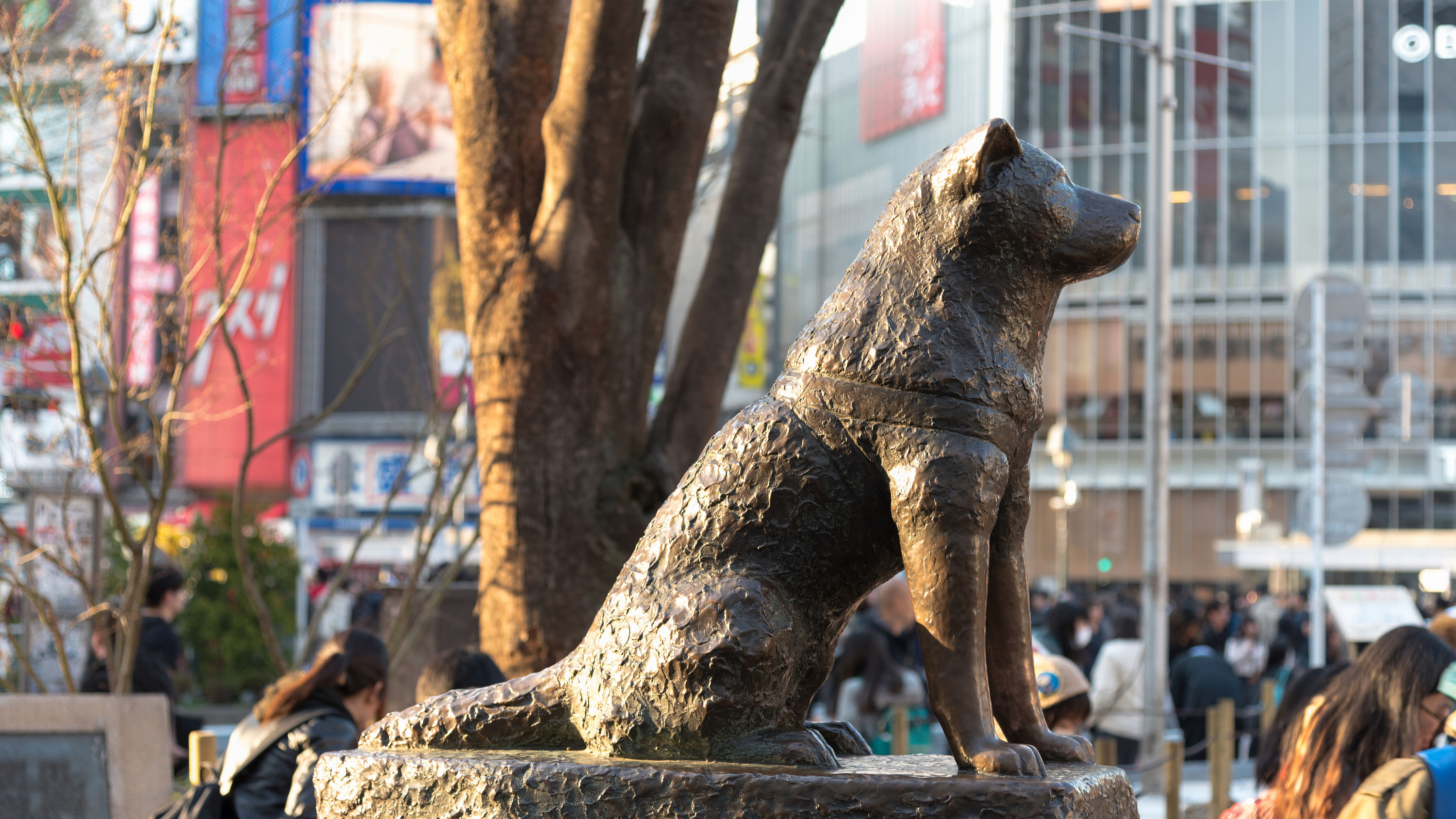
Hachiko the Akita dog waited every single day at Shibuya Station for a man who was never coming back. For almost ten years, he sat by the exit and watched the crowds for his owner, Professor Hidesaburo Ueno. It is a story that proves love does not have a clock or a calendar.
The short version of the story is that Hachiko and the Professor had a perfect routine in Tokyo during the 1920s. Every morning, they walked to the station together, and every evening, the dog returned to meet the train. When the Professor died suddenly at work, Hachiko stayed. He lived on the streets and kept his watch for 3,646 days until he died in the same spot where he last saw his friend. It is the most famous example of loyalty in history.
How a Small Puppy Met a Lonely Professor
This story starts in 1924 in a rural part of Japan called Odate. Hachiko was born on a farm, a golden-brown Akita with thick fur and a curled tail. At the time, Professor Ueno was looking for a purebred Akita, which was quite rare back then. He taught at Tokyo Imperial University and lived a quiet, scholarly life. When the puppy arrived in a crate after a long train ride, he was weak and cold. The Professor spent nights nursing him back to health, and they formed a bond that nobody could break.
They lived in a neighborhood called Shibuya. Every morning, as the sun came up, the two of them would walk out the front door. Hachiko was not just a pet; he was a partner. He walked the Professor all the way to the doors of Shibuya Station. He watched the man buy his ticket and disappear into the crowd of commuters. Then, the dog would turn around and walk home alone. He knew exactly when the evening train would pull in.
At 3:00 PM every afternoon, Hachiko was back. He would sit near the wicket and wait. When the Professor stepped off the train, his face would light up to see those pointy ears and wagging tail. They did this every day for over a year. Neighbors in Shibuya got used to seeing them. It was a local clock they could set their watches by. You can read more about how people share these kinds of tales in this look at oral history and how stories pass down through time.

The Day the Routine Broke Forever
May 21, 1925, started like any other Tuesday. The Professor patted Hachiko on the head, boarded his train, and went to the university. During a faculty meeting that afternoon, he suffered a sudden brain hemorrhage. He died instantly. He never made it to the train station that evening. He never even got to say goodbye to his family or his dog. Back at Shibuya, the 3:00 PM train arrived, and the platform emptied. Hachiko sat there, eyes fixed on the exit, but the one face he wanted never appeared.
Imagine being that dog. You do not understand what death is. You only know that your friend is late. Hachiko waited until the last train of the night, then he finally went home. But the next day, he was back. And the day after that. He thought if he just stayed in the right spot, the world would fix itself. It is heartbreaking to think about him sitting there while the Professor's family was busy with a funeral he could not attend.
The family eventually moved away, and they gave Hachiko to a former gardener who lived miles from the station. But the dog would not stay put. He kept escaping and running back to the Professor's old house. When he realized the house was empty, he went to the only other place where they used to meet. He went back to the station. He decided that the station was his home now because that was where the hope lived.
Life on the Cold Streets of Shibuya
For the next few years, Hachiko became a permanent fixture of the city. He lived under train cars or in the crawl spaces of the station. He was often hungry and cold. In the beginning, the station staff and the commuters were not always kind to him. Some people thought he was just a stray and would throw water on him or try to shoo him away. Kids would sometimes tease him because he just sat there, staring at the doors, not moving for hours.
His body started to show the wear and tear of life outside. One of his ears began to droop, and he got scars from fights with other dogs. He looked like a shadow of the healthy puppy the Professor had raised. Yet, every single day, when the afternoon train whistled, he stood up and walked to his spot. He did not care about the rain or the snow. He only cared about that exit. You might enjoy reading about other long-term mysteries like The Letter That Arrived Fifty Years Late to a House in Maine which also shows how time feels different when you are waiting for something important.
Everything changed in 1932 when one of the Professor's former students saw Hachiko at the station. The student followed the dog to the gardener's house and learned the whole history. He was moved to tears by the dog's dedication. He wrote an article for one of Tokyo's biggest newspapers. He titled it "The Tale of a Poor Old Dog: Waiting for Seven Years for His Deceased Master." Overnight, Hachiko became a national hero.
Why did Hachiko wait for ten years?
People often ask what goes through a dog's mind during a decade of waiting. Scientists say dogs have a very strong sense of time based on their internal rhythms. For Hachiko, the 3:00 PM train was a biological trigger. But beyond biology, there was a deep emotional bond. To Hachiko, the Professor was his entire world. If you want to see more about how these emotional accounts affect us, check out this page on the human-interest story and why we love them.
Once the newspaper article came out, the treatment of the dog changed. People started bringing him gourmet food and treats. Travelers would come from far away just to pat his head or sit with him for a minute. The station staff who used to shoo him away now gave him a warm place to sleep inside. He became a symbol of the old Japanese values of loyalty and devotion. He was no longer a stray dog; he was "Chuken Hachiko," which means the faithful dog Hachiko.
Even with all the new attention, Hachiko never got distracted. He would accept a treat, but his eyes never left those station doors. He was not looking for fame or snacks. He was looking for his friend. It makes me wonder if he felt the Professor's spirit there. Or maybe he just felt that if he left his post, that would be the moment the Professor finally walked through the door. He stayed for nine years, nine months, and fifteen days.
The Final Meeting and a Lasting Legacy
On March 8, 1935, Hachiko was found dead on a street near Shibuya Station. He was eleven years old. He had spent almost his entire life waiting. When the news broke, the city went into mourning. They brought his body back to the station waiting room, and people covered him in flowers. Even the Professor's widow came to pay her respects to the dog who had loved her husband more than anyone else could imagine.
Today, if you go to Shibuya Station, you will see a bronze statue of Hachiko. It stands at the "Hachiko Exit," the busiest meeting spot in the world. Thousands of people meet there every hour. They say, "Meet me at Hachiko," using the dog's loyalty to find their own friends. It is a beautiful way to keep his memory alive. He finally became the landmark he had been in real life for so many years. You can find more true stories about loyal animals and amazing bonds on our main page.
The story of Hachiko reminds us that love is not about what we get back. It is about the choice to stay. Even when the world moves on, and even when it seems like hope is gone, there is something noble about standing your ground. Hachiko did not need words to tell us that. He just needed to show up. Next time you are waiting for someone who is running late, think of the dog who waited ten years. It might make your five minutes feel a little shorter.
What would you wait ten years for? Is there a person or a dream that you would never give up on, no matter what? It is a big question to ask yourself as you go about your day. Maybe we all need a little bit of that Hachiko spirit in our lives.